
Search to Lease Journey Redesign

Search to Lease Journey Redesign

Search to Lease Journey Redesign

Led research, UX, testing, and UI to optimise end-to-end journey

Intro

Client

Client

Vanarama

Role

Role

Lead Product Designer

Industry

Industry

Vehicle Leasing / Automotive

Proptech

Timeline

8 Weeks

Team

PM, 2 Engineers

Rebuilding The Search To Product Journey

Rebuilding The Search To Product Journey

Vanarama was one of the UK's leading vehicle leasing platforms, strong brand, high traffic, large inventory. The proposition was solid, but the product journey was not performing.

Vanarama was one of the UK's leading vehicle leasing platforms, strong brand, high traffic, large inventory. The proposition was solid, but the product journey was not performing.

My Scope

I led the Search - Product journey end-to-end. From diagnosing the issues through research and discovery to testing and UI.

I led the Search - Product journey end-to-end. From diagnosing the issues through research and discovery to testing and UI.

Behavioural analysis using Hotjar heatmaps and session recordings

CMS marketing slot integration across key pages, operable by marketing without engineering dependency

Baseline and validation usability testing via UsabilityHub

Decision mapping across search, derivative, and product pages

UI design across all three stages of the journey

The Challenge

To redesign a fragmented vehicle leasing journey into a seamless path from search to lease. Giving users the confidence to commit, not just browse.

To redesign a fragmented vehicle leasing journey into a seamless path from search to lease. Giving users the confidence to commit, not just browse.

Outcome Snapshot

45%

Reduction in search page bounce rate

32%

Increased conversion to product pages.

35%

Increase derivative page engagement

48%

Reduction in delivery calls enquires

Research

Understanding The Failures

Understanding The Failures

I needed to understand exactly what each stage of the journey was failing to do. I ran research tracks in parallel to understand what decision users were trying to make at each stage and why the journey wasn't supporting it.

I needed to understand exactly what each stage of the journey was failing to do. I ran research tracks in parallel to understand what decision users were trying to make at each stage and why the journey wasn't supporting it.

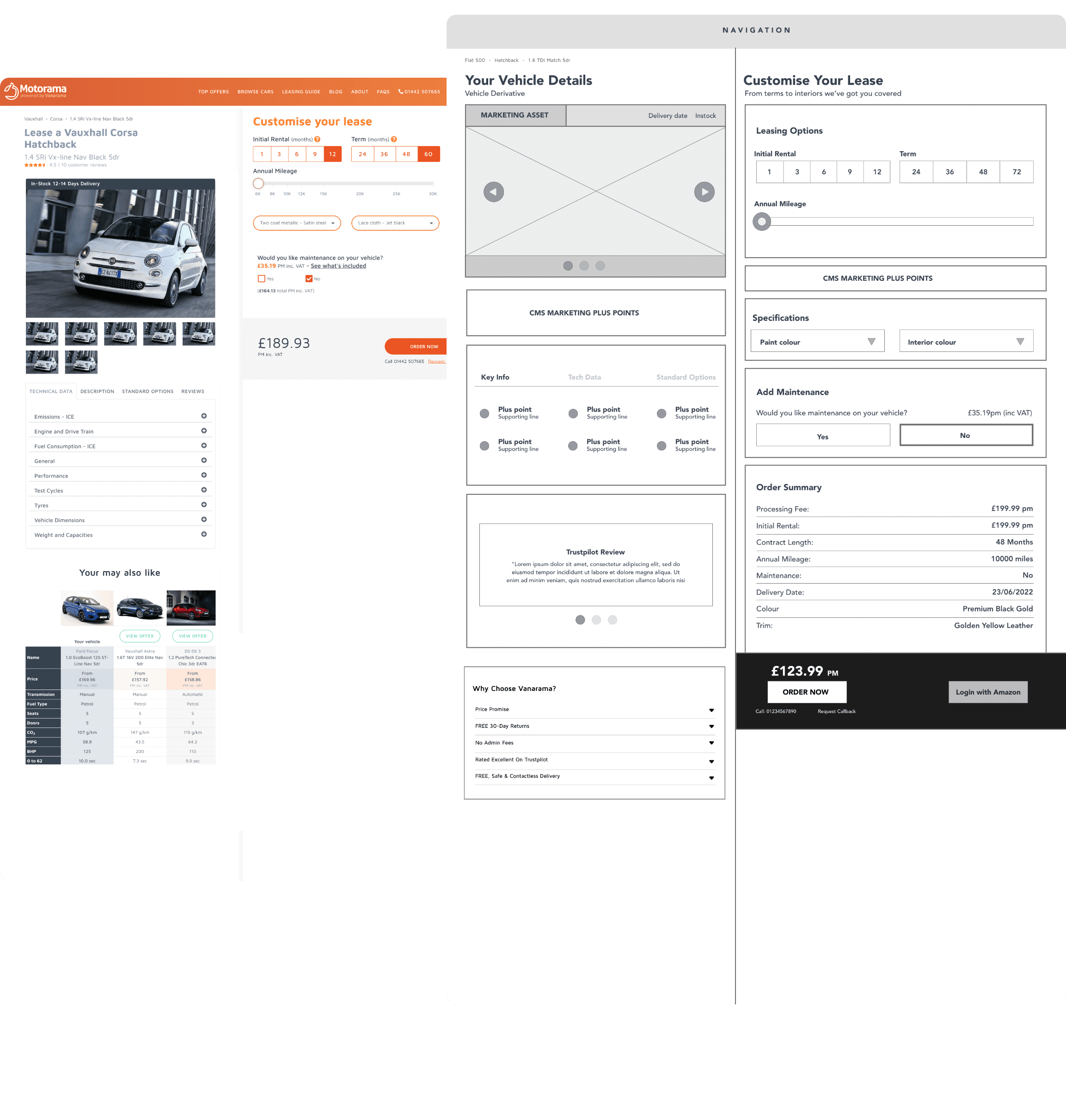
Original Screens

Usability Testing

Testing found significant gaps in the journey

Testing found significant gaps in the journey

Testing found significant gaps in the journey

Respondents completed structured tasks across the existing journey. The results confirmed key areas that needed addressing and highlighted cognitive gaps in the flow.

Respondents completed structured tasks across the existing journey. The results confirmed key areas that needed addressing and highlighted cognitive gaps in the flow.

Only 1 in 10 respondents found the search layout effective

70% failed to locate delivery time without additional clicks

40% abandoned the derivative task before completing it

Only 20% found the derivative page clear enough to choose a variant

Competitive Analysis
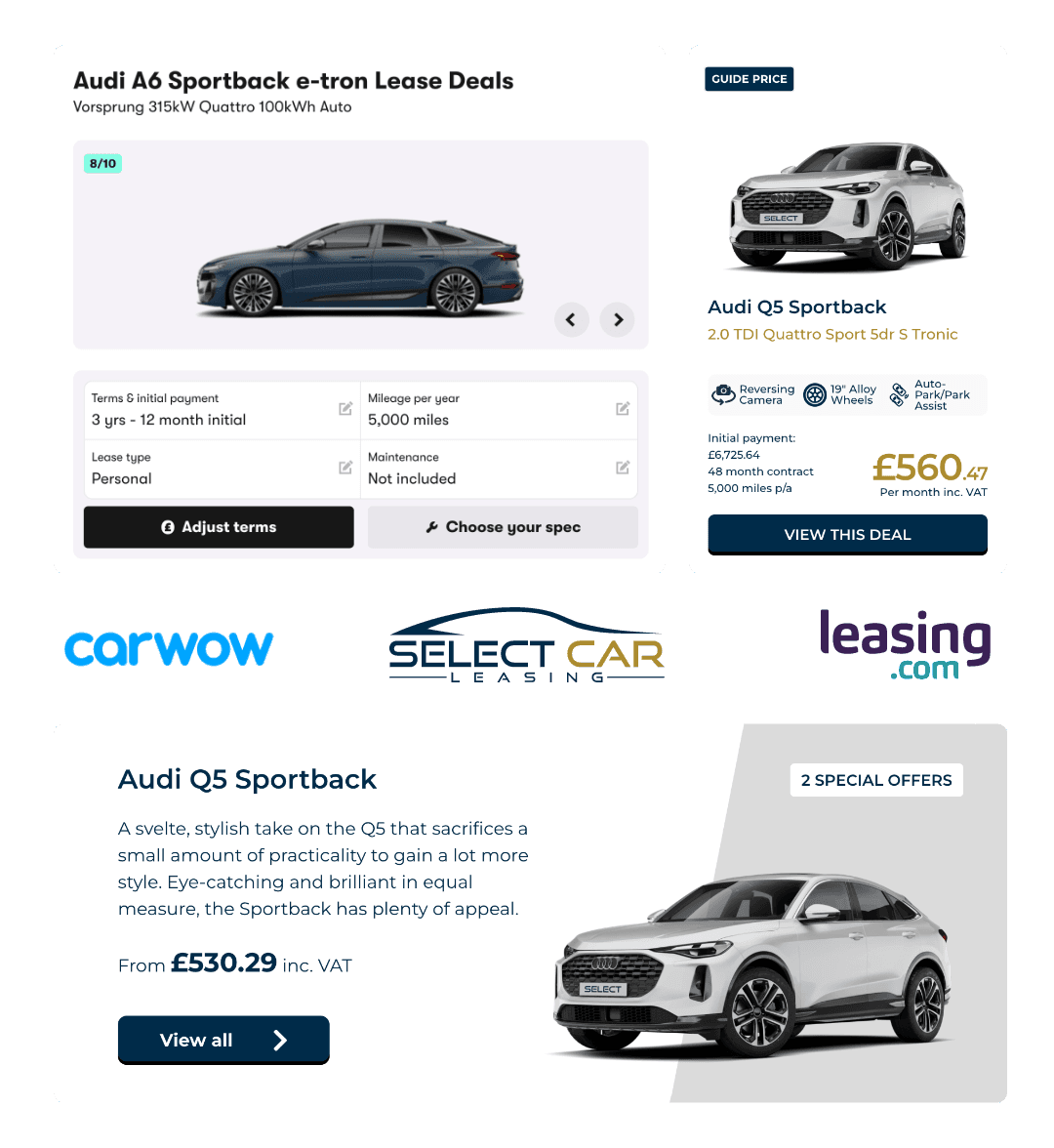
Benchmarking UK leasing platforms showed the gap clearly.

Benchmarking UK leasing platforms showed the gap clearly.

Benchmarking UK leasing platforms showed the gap clearly.

The strongest performers surfaced key specs at card level, gave users filtering tools immediately, and established trust before asking for any commitment. Vanarama was asking users to do significantly more work with significantly less information than any comparable platform.

The strongest performers surfaced key specs at card level, gave users filtering tools immediately, and established trust before asking for any commitment. Vanarama was asking users to do significantly more work with significantly less information than any comparable platform.

Customer Service Insight

Analysing inbound call logs revealed something important

Analysing inbound call logs revealed something important

Analysing inbound call logs revealed something important

Delivery time was the single most common inbound call driver. Every unanswered query was a lost conversion and an operational cost.

Delivery time was the single most common inbound call driver. Every unanswered query was a lost conversion and an operational cost.

0%

of inbound calls were delivery related

65%

of inbound calls were delivery related

0%

had already visited the journey before calling

70%

had already visited the journey before calling

0%

were confused over which variant suited their needs

55%

were confused over which variant suited their needs

Strategy

Map The Decision. Then Design For It.

Map The Decision. Then Design For It.

Leasing a vehicle follows a logical sequence of questions. Users can't progress until each one is resolved. I mapped what each stage needed to answer before a user could move forward and used that as the design brief..

Leasing a vehicle follows a logical sequence of questions. Users can't progress until each one is resolved. I mapped what each stage needed to answer before a user could move forward and used that as the design brief..

Decision Mapping

Search Results

Users browse vehicles

Can I find a vehicle worth considering?

Requires specs, availability, delivery time, and filtering at card level

Derivative Page

Users explore vehicle groups

Which variant is right for me?

Requires imagery, comparable specs, and a decision anchor

Product Page

Users opens vehicle details

Am I confident enough to commit?

Requires social proof, process clarity & summary that builds as they configure

The Wireframes
Getting The Structure Right

Getting The Structure Right

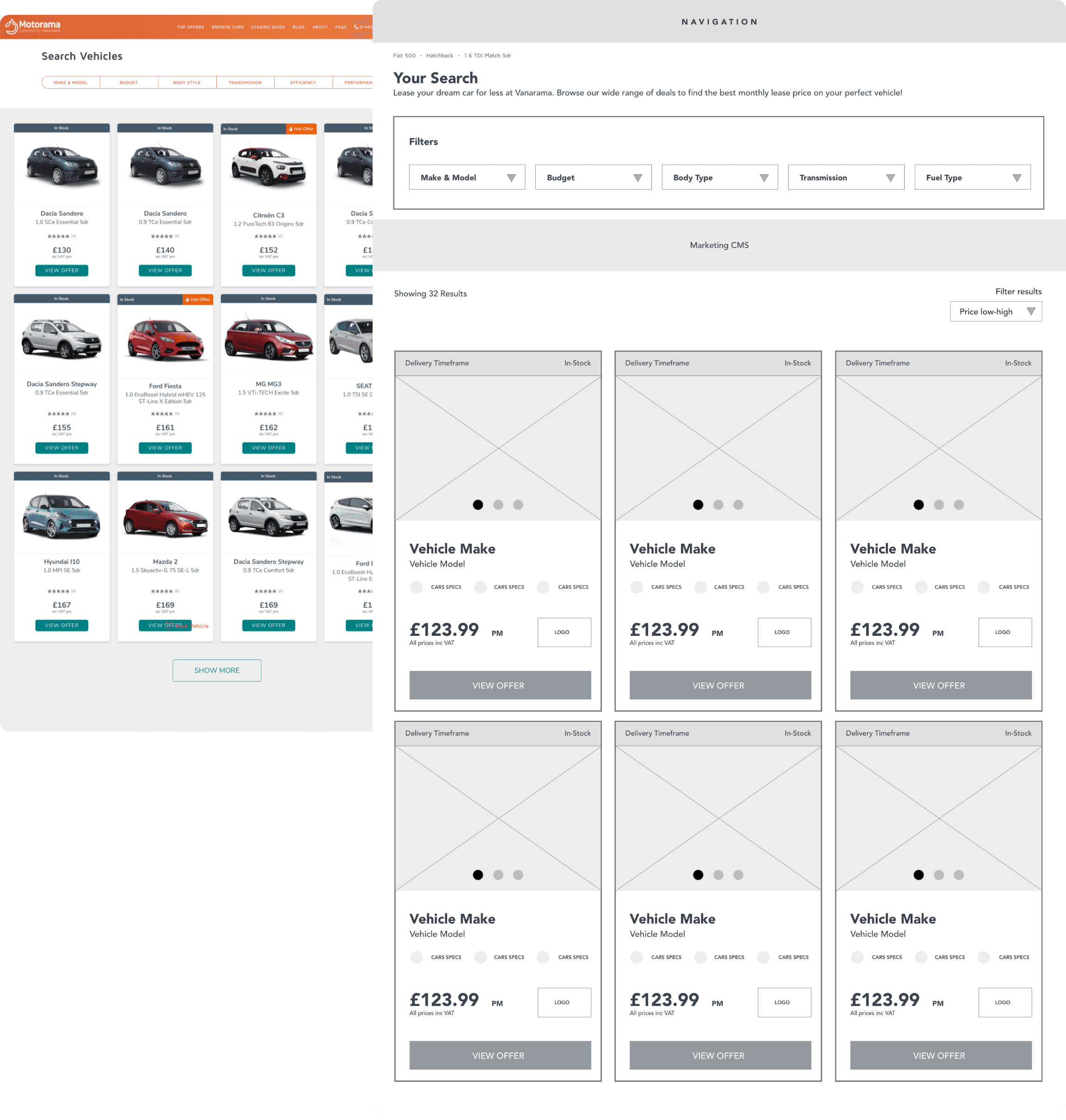
With the decision mapping defined I moved into wireframes across all three stages before any visual design began. Testing and defining structural decisions about what information lived where and in what order, built to be aligned with stakeholders before a single visual choice was made.

With the decision mapping defined I moved into wireframes across all three stages before any visual design began. Testing and defining structural decisions about what information lived where and in what order, built to be aligned with stakeholders before a single visual choice was made.

Original vs New Wireframe

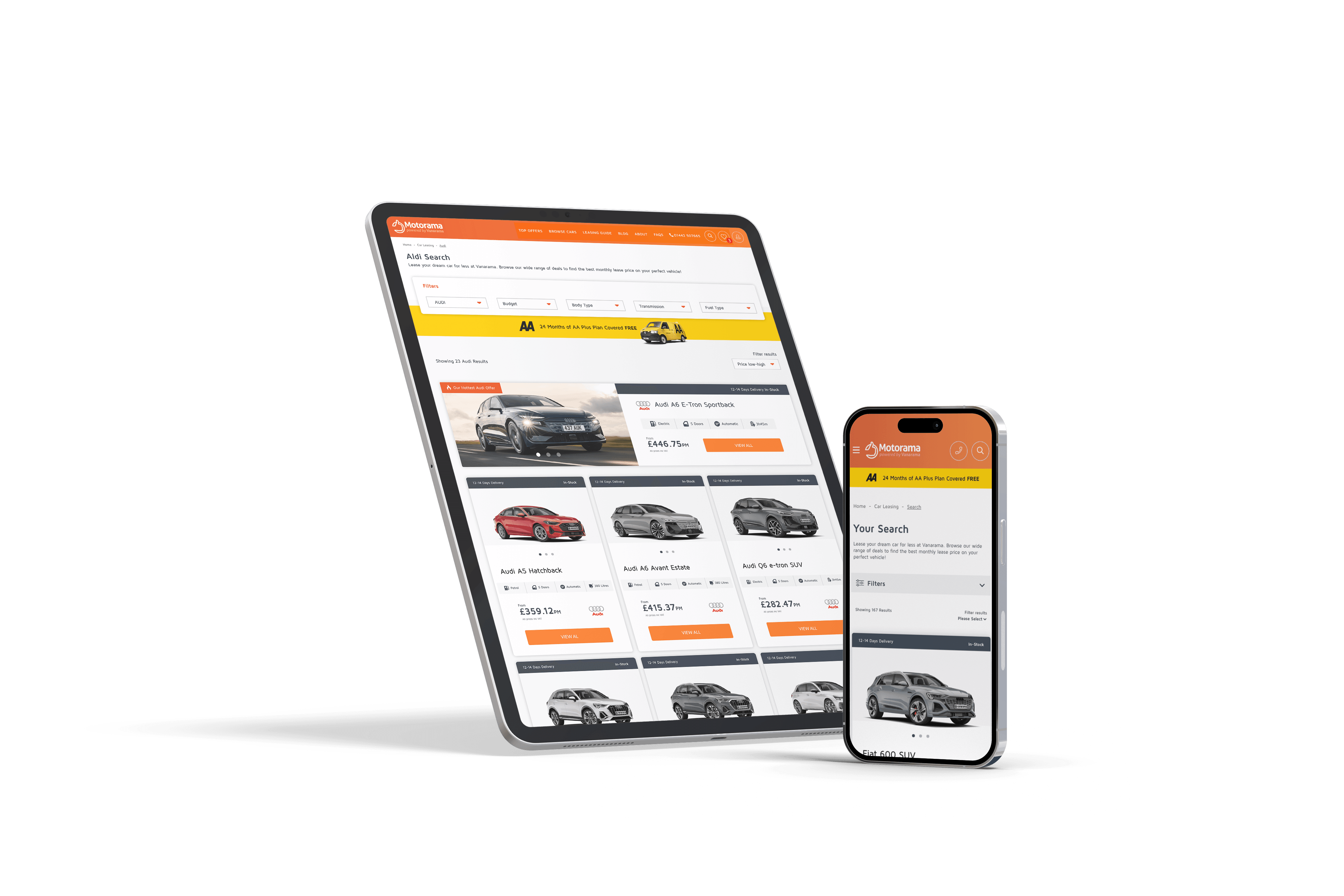
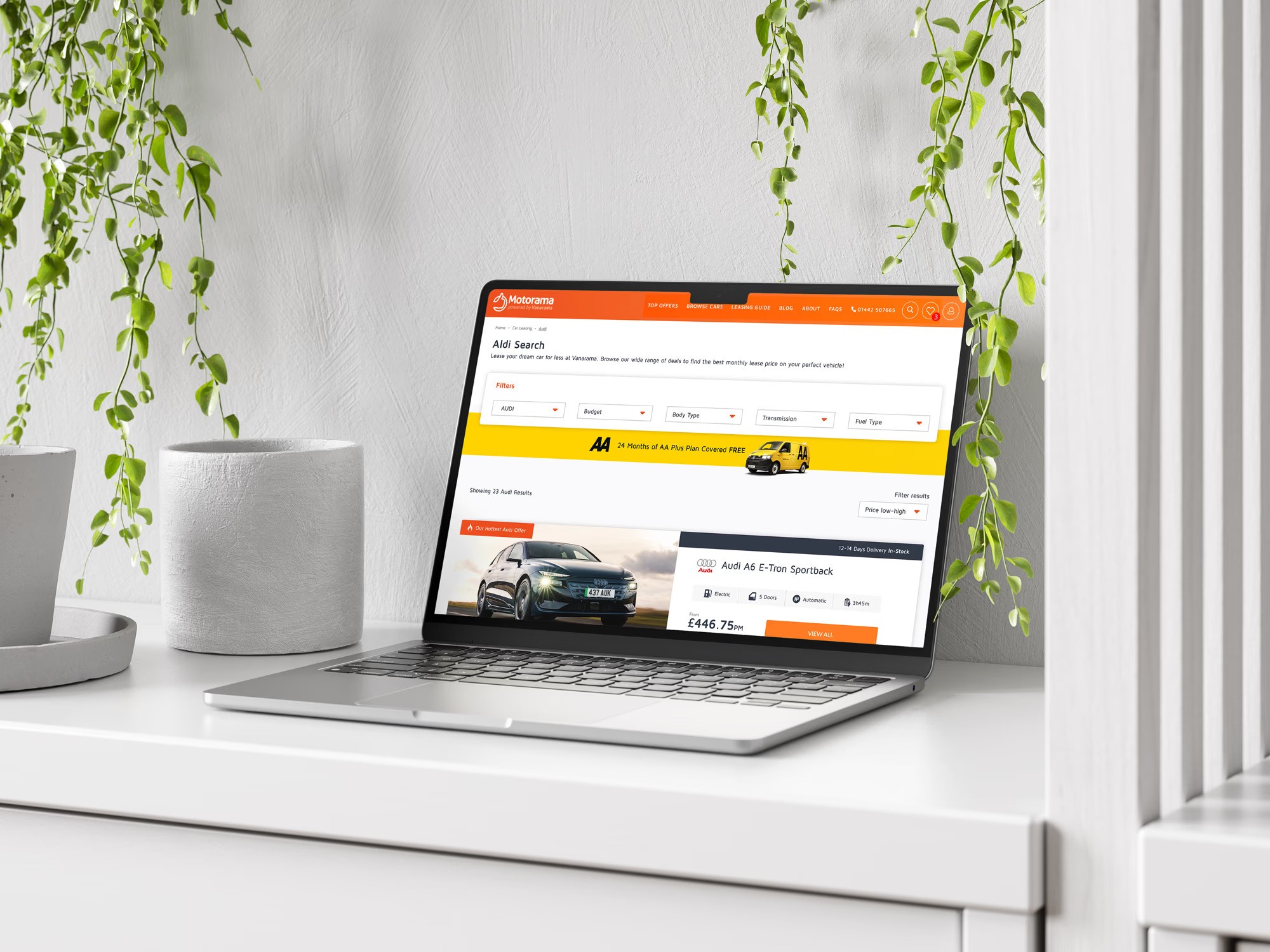
New Search Page

Earning the users first click

Earning the users first click

Earning the users first click

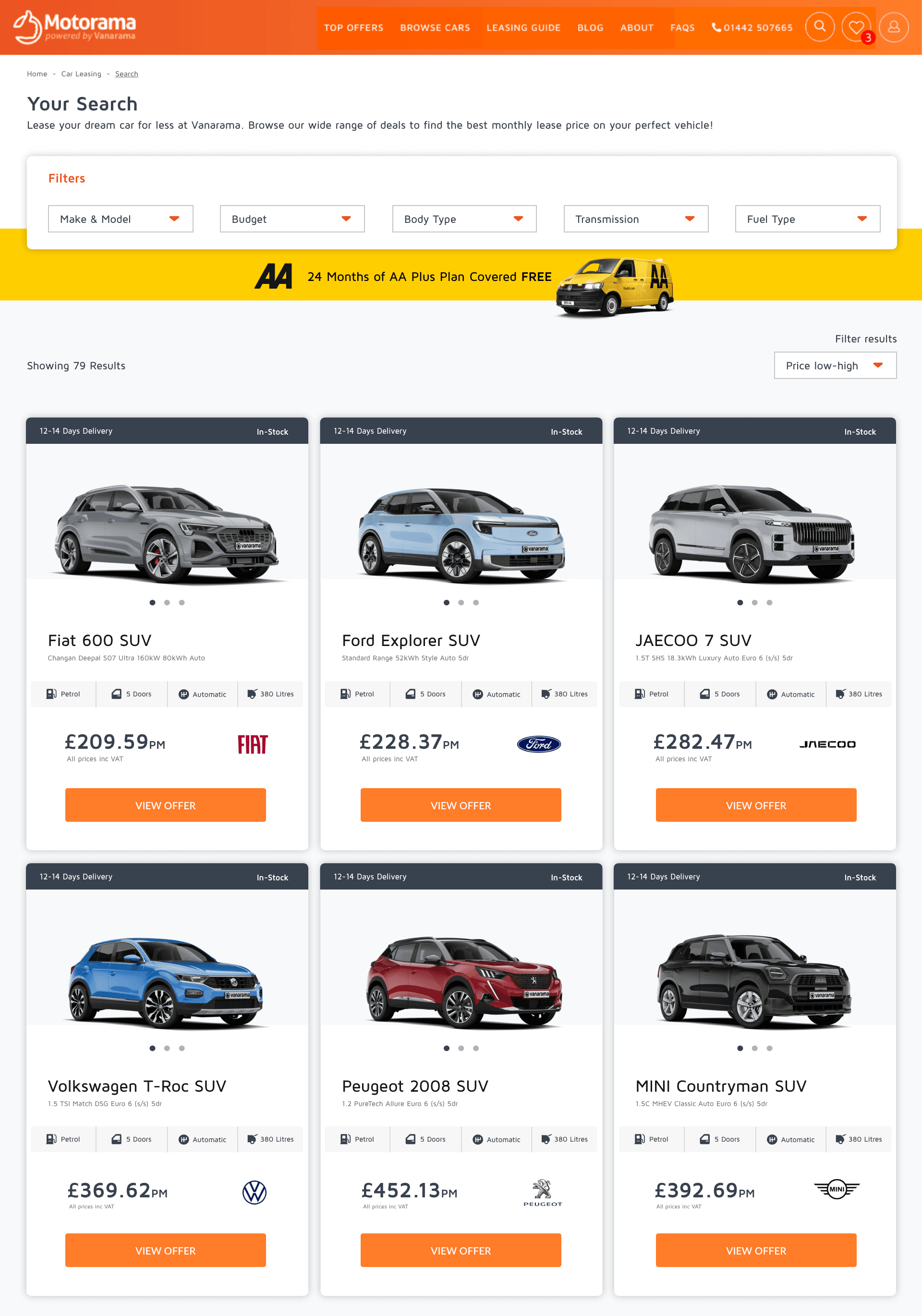
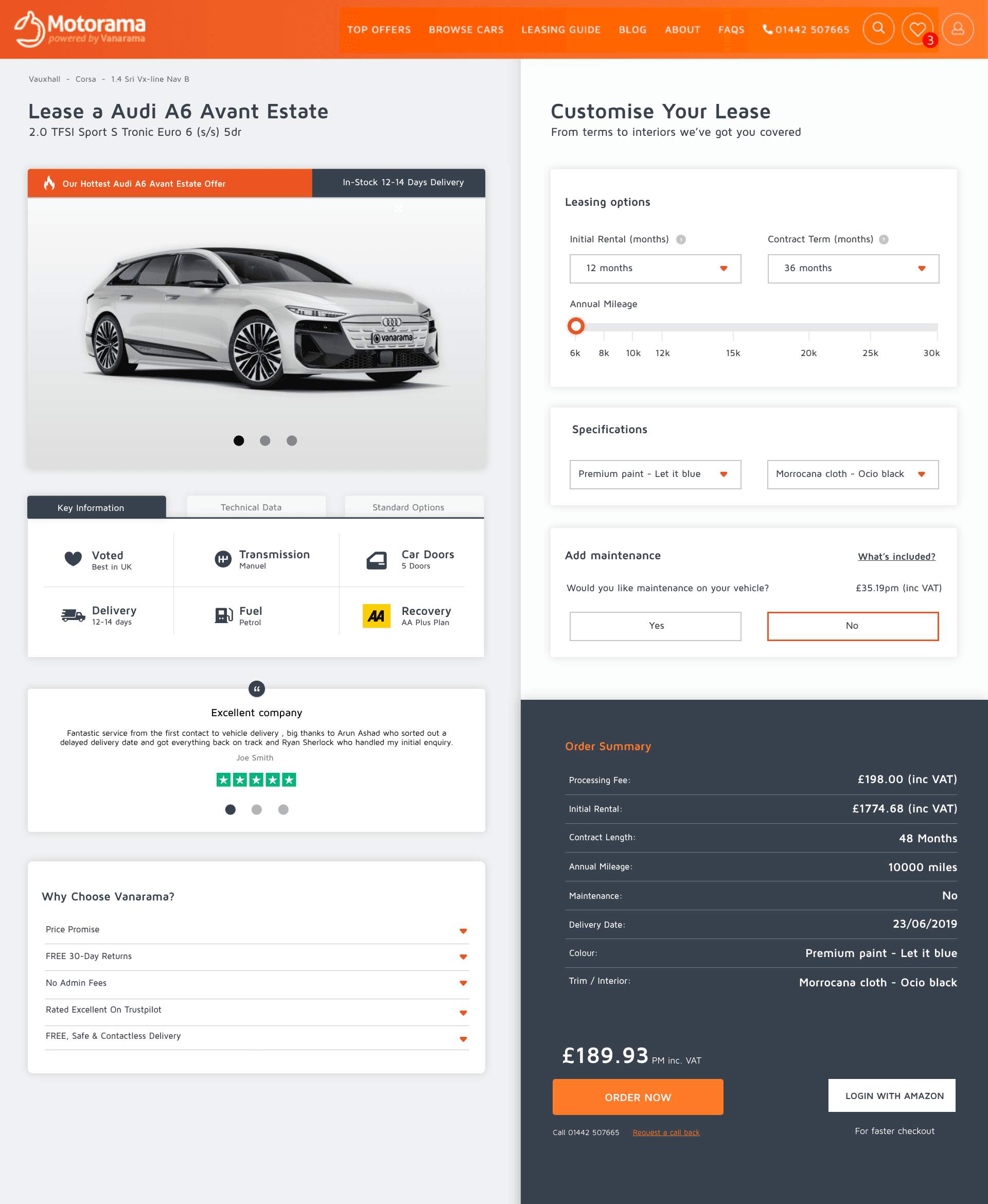
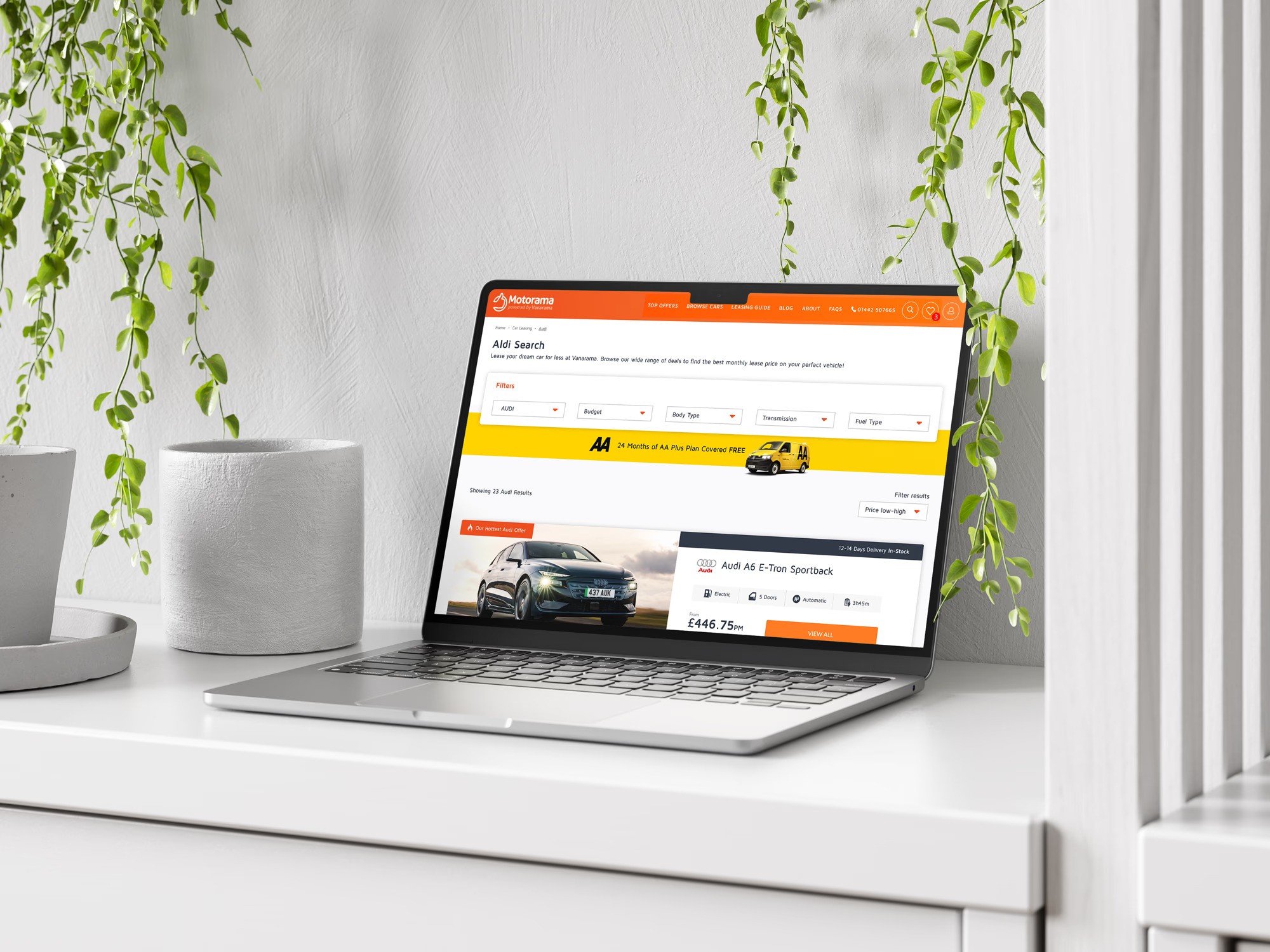
Every element on the redesigned search page earned its place by answering one question: does this help a user decide, or does it create noise?

Delivery time, availability and spec icons replaced the empty review section. Manufacturer logos and an image slider gave users the context to qualify a vehicle without clicking through. A filter bar meant relevant vehicles were reachable in seconds.

Every element on the redesigned search page earned its place by answering one question: does this help a user decide, or does it create noise?

Delivery time, availability and spec icons replaced the empty review section. Manufacturer logos and an image slider gave users the context to qualify a vehicle without clicking through. A filter bar meant relevant vehicles were reachable in seconds.

0%

found the search structure effective, up from 10%

65%

found the search structure effective, up from 10%

0%

located delivery time without assistance, up from 30%

70%

located delivery time without assistance, up from 30%

0

seconds quicker to find a relevant vehicle

55%

seconds quicker to find a relevant vehicle

Exisiting Wireframe

Exisiting Wireframe

Uninformed review section taking focus

No multi images

No car spec info

No delivery context
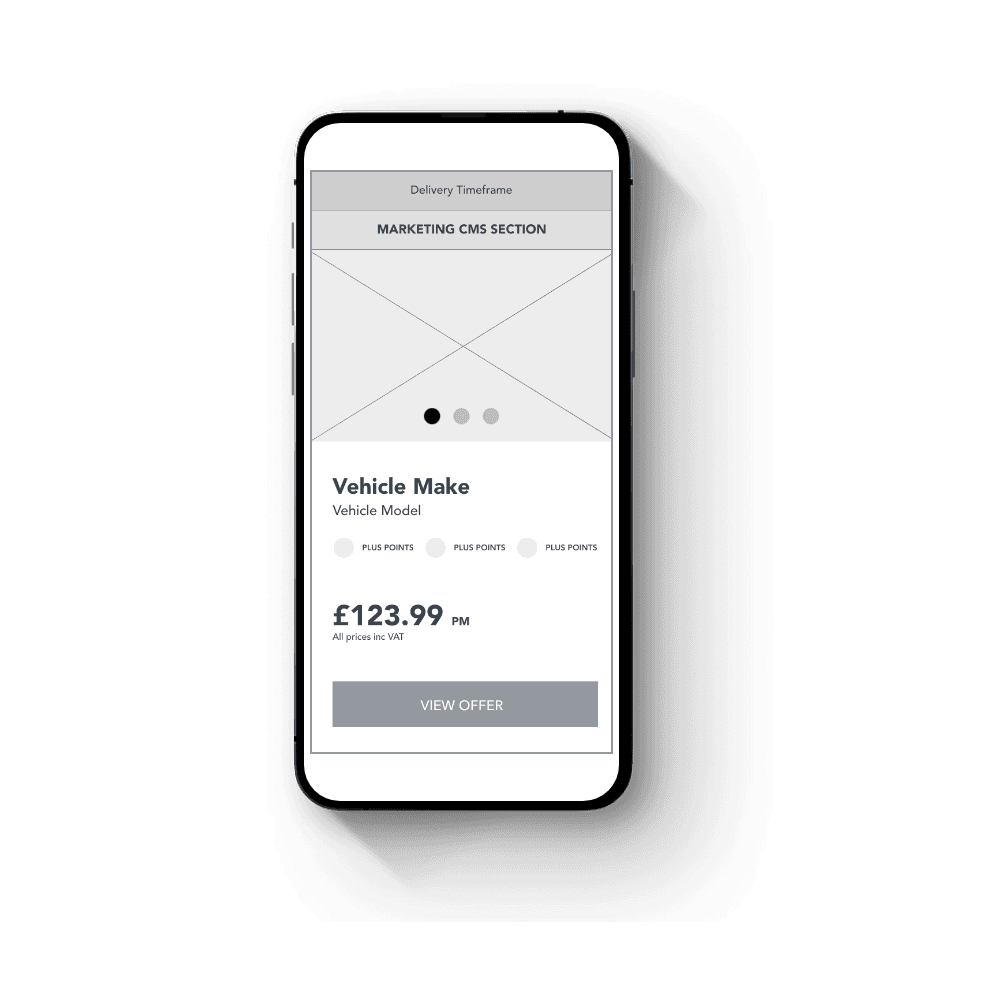
First Iteraction

First Iteraction

Delivery timeline added

Scrollable images on cards

Car spec comparison info

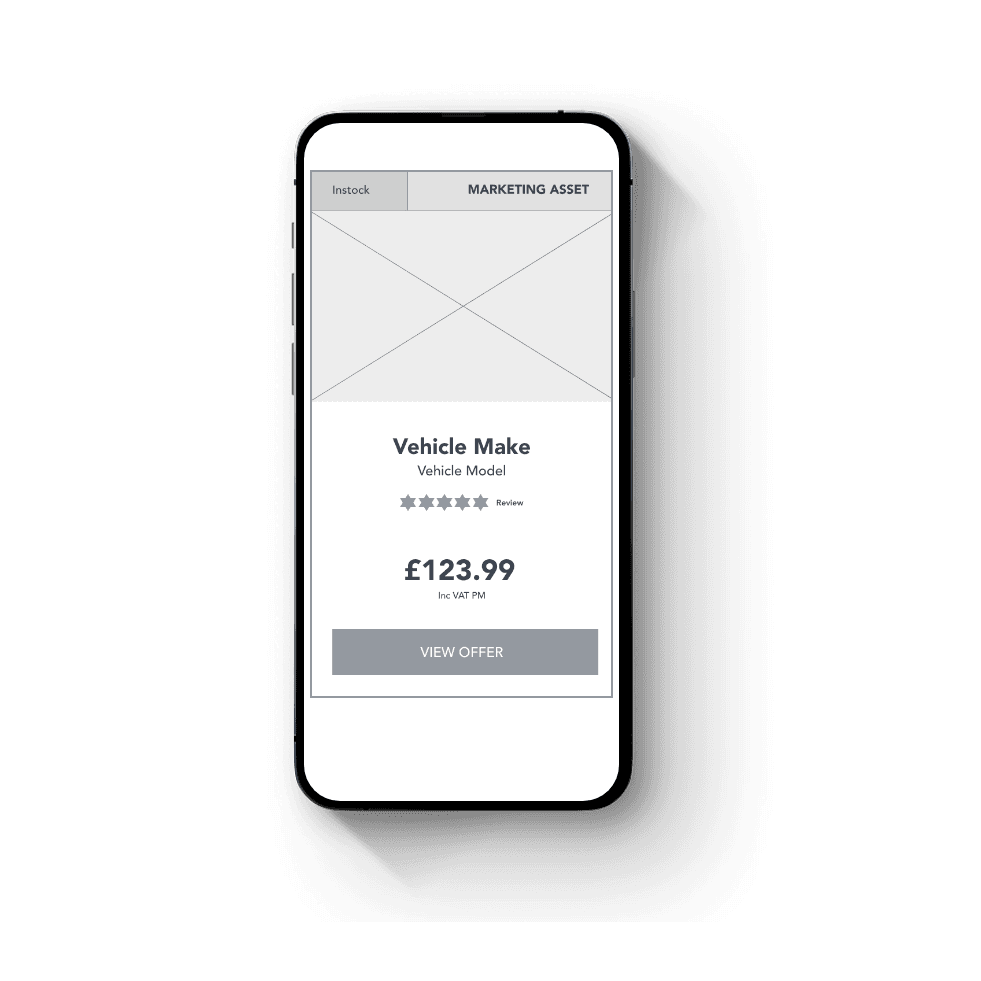
Marketing CMS section
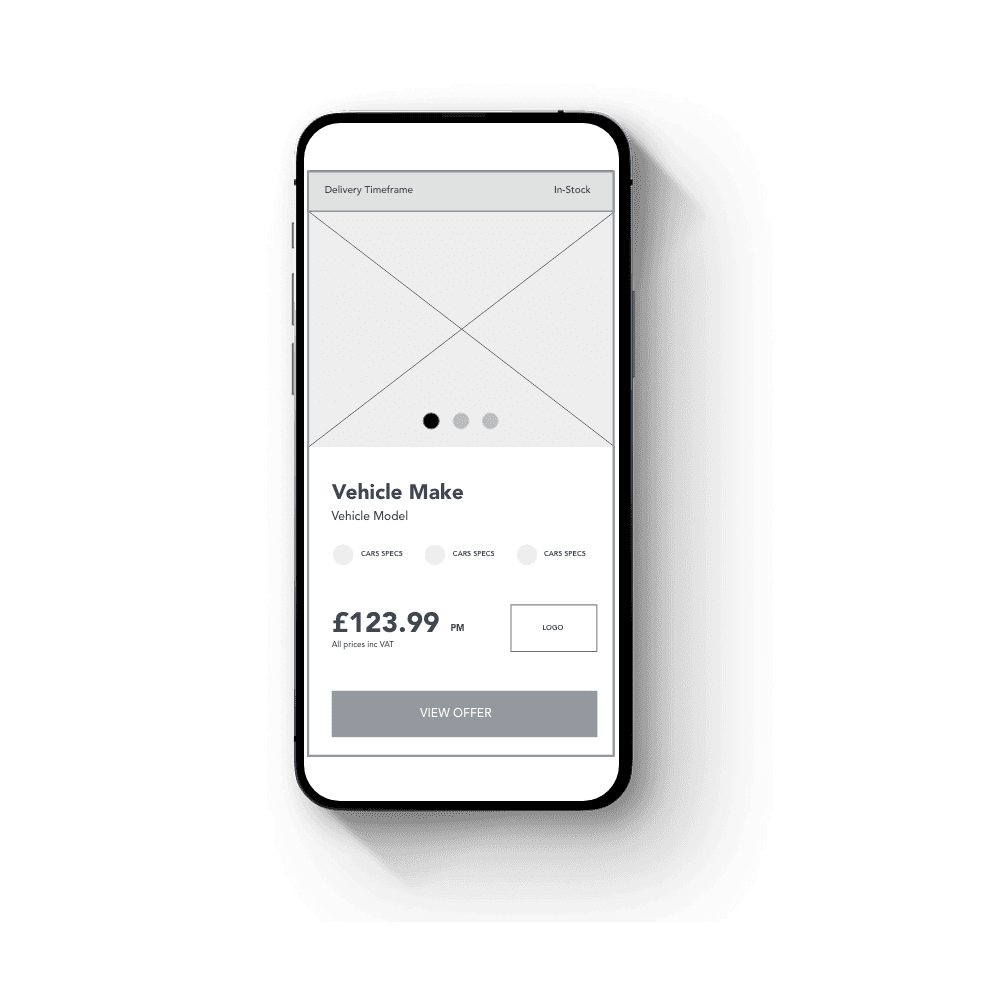
Second Iteration

Second Iteration

Marketing CMS - plan to page

Larger scrollable images

Car model & spec added

Car logo added for scannability
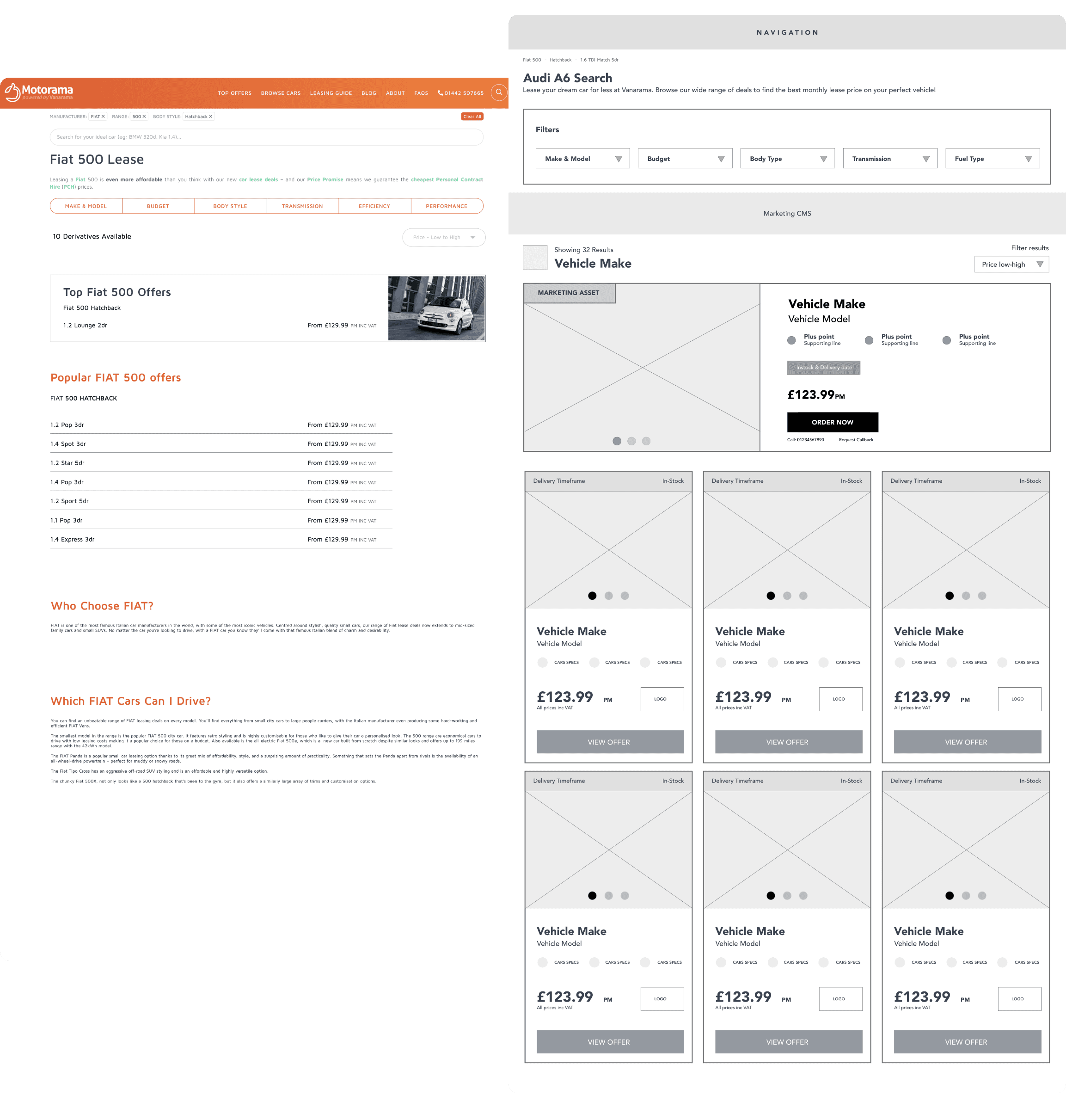
Original vs New Wireframe

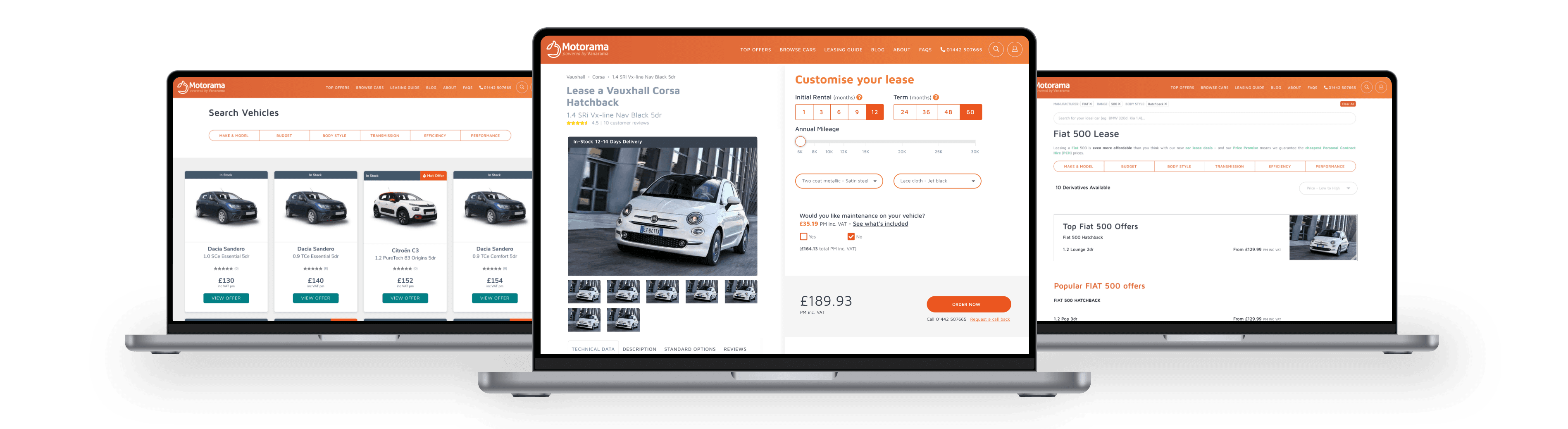
New Definative Page

Going from a list to a decision tool

Going from a list to a decision tool

Going from a list to a decision tool

The derivative page stopped presenting options and started supporting choices.

Imagery on every variant for the first time made alternatives feel real rather than theoretical. Tech specs at card level meant users could compare without additional clicks. Filters, delivery info and clear scannability gave users everything needed to commit to a variant with confidence.

The derivative page stopped presenting options and started supporting choices.

Imagery on every variant for the first time made alternatives feel real rather than theoretical. Tech specs at card level meant users could compare without additional clicks. Filters, delivery info and clear scannability gave users everything needed to commit to a variant with confidence.

0%

found the layout clear enough to compare variants, up from 20%

65%

found the layout clear enough to compare variants, up from 20%

0%

identified the right variant without backtracking, up from 25%

70%

identified the right variant without backtracking, up from 25%

0%

faster to select a variant

55%

faster to select a variant

Original vs New Wireframe

New Product Page

Removing the last reasons not to commit

Removing the last reasons not to commit

Removing the last reasons not to commit

By the product page the design goal shifts from building interest to removing friction.

The two-column layout separates exploration from configuration — vehicle detail on the left, a real-time order summary building on the right as users configure their lease. Trustpilot integration, key specs as icons, and a Why Choose Vanarama accordion addressed every remaining doubt without overwhelming the page. The You May Also Like section from the original was removed entirely — testing showed it pulled users back into browsing at the exact moment they were ready to commit.

By the product page the design goal shifts from building interest to removing friction.

The two-column layout separates exploration from configuration — vehicle detail on the left, a real-time order summary building on the right as users configure their lease. Trustpilot integration, key specs as icons, and a Why Choose Vanarama accordion addressed every remaining doubt without overwhelming the page. The You May Also Like section from the original was removed entirely — testing showed it pulled users back into browsing at the exact moment they were ready to commit.

0%

felt confident enough to proceed to order after viewing the page, up from 25%

65%

felt confident enough to proceed to order after viewing the page, up from 25%

0%

located key delivery and spec information without scrolling, up from 20%

70%

located key delivery and spec information without scrolling, up from 20%

0%

completed the configuration task without abandoning, up from 30%

55%

completed the configuration task without abandoning, up from 30%

The Design

The Design Tell The Story

The Design Tell The Story

With the structure validated, the visual system had one job: make a large inventory feel manageable without losing the aspiration that makes someone want to lease a vehicle in the first place.

With the structure validated, the visual system had one job: make a large inventory feel manageable without losing the aspiration that makes someone want to lease a vehicle in the first place.

The Design Building Blocks

A grid that works harder

A grid that works harder

Status bar creates immediate hierarchy, delivery & availability first

Consistent image ratio across every card makes comparison simple

Spec icons informative without adding visual noise

Manufacturer logo, price, brand & commitment in one place

Orange CTA consistent across the grid, a clear action

AA banner breaks the grid intentionally without disrupting hierarchy
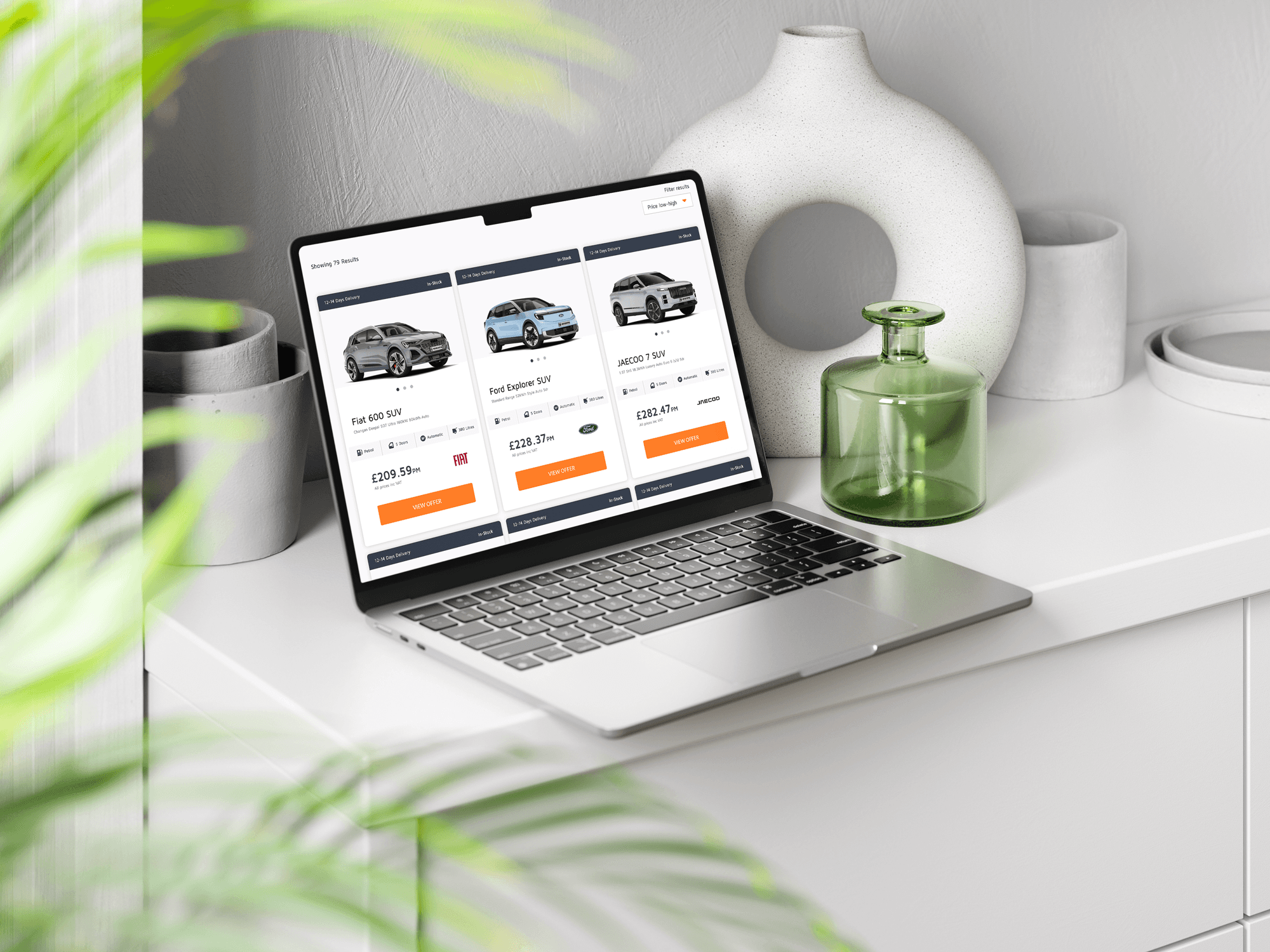
Search Page
Derivatives Page
Product Page

Future Proofing

One page, two registers

One page, two registers

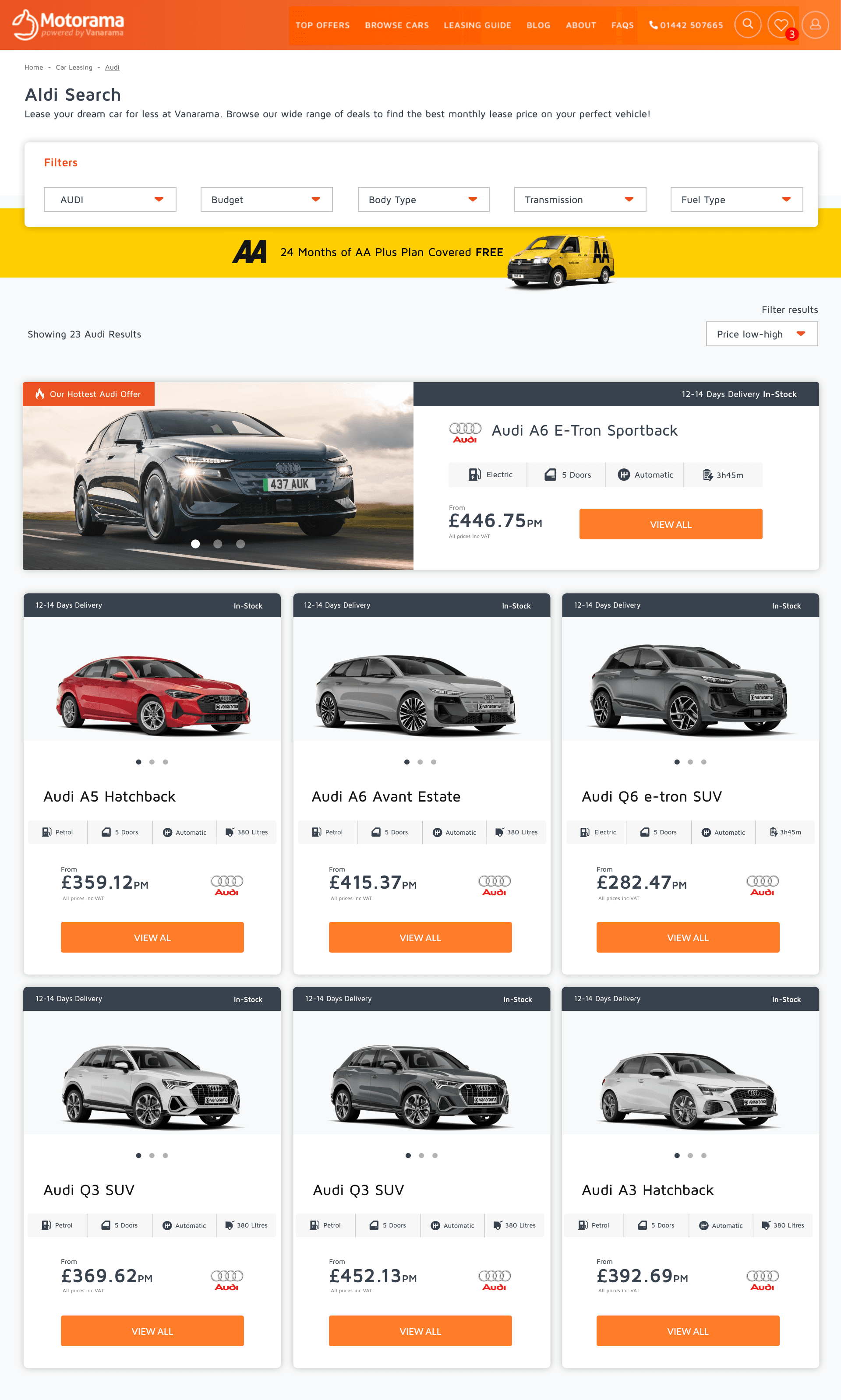
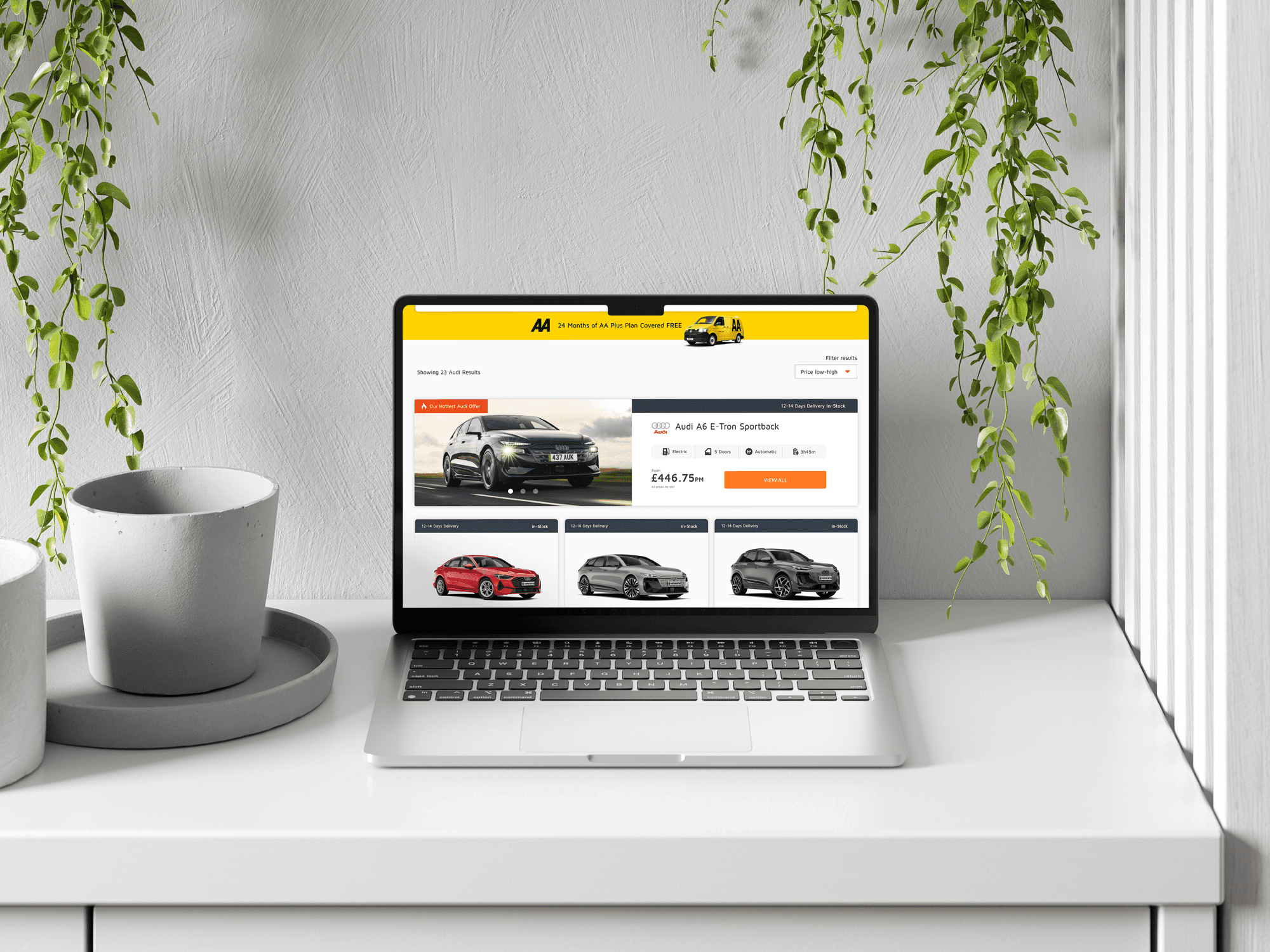
The featured hero operates at a different visual scale to the card grid, creating clear hierarchy between recommendation and choice.

The featured hero operates at a different visual scale to the card grid, creating clear hierarchy between recommendation and choice.

Hot Offer icon and delivery badge paired, urgency and reassurance in one bar

Full-width lifestyle imagery sets an aspirational register the card grid deliberately doesn't match

Brand logo and model name at hero scale, authority at the moment of first impression

Card grid drops back to consistent treatment, hierarchy clear without being heavy-handed
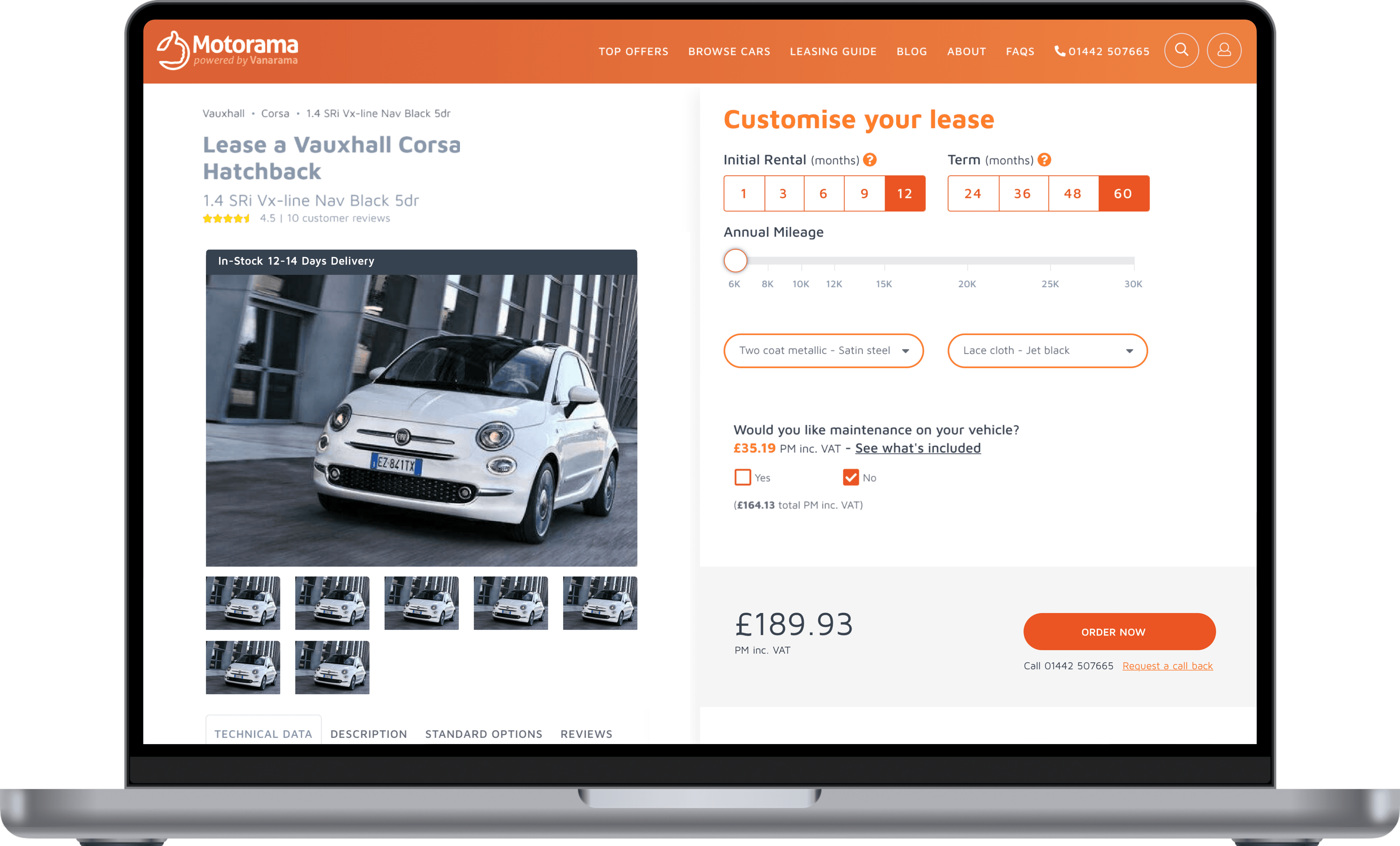
Before vs After
Future Proofing

Built for commitment

Built for commitment

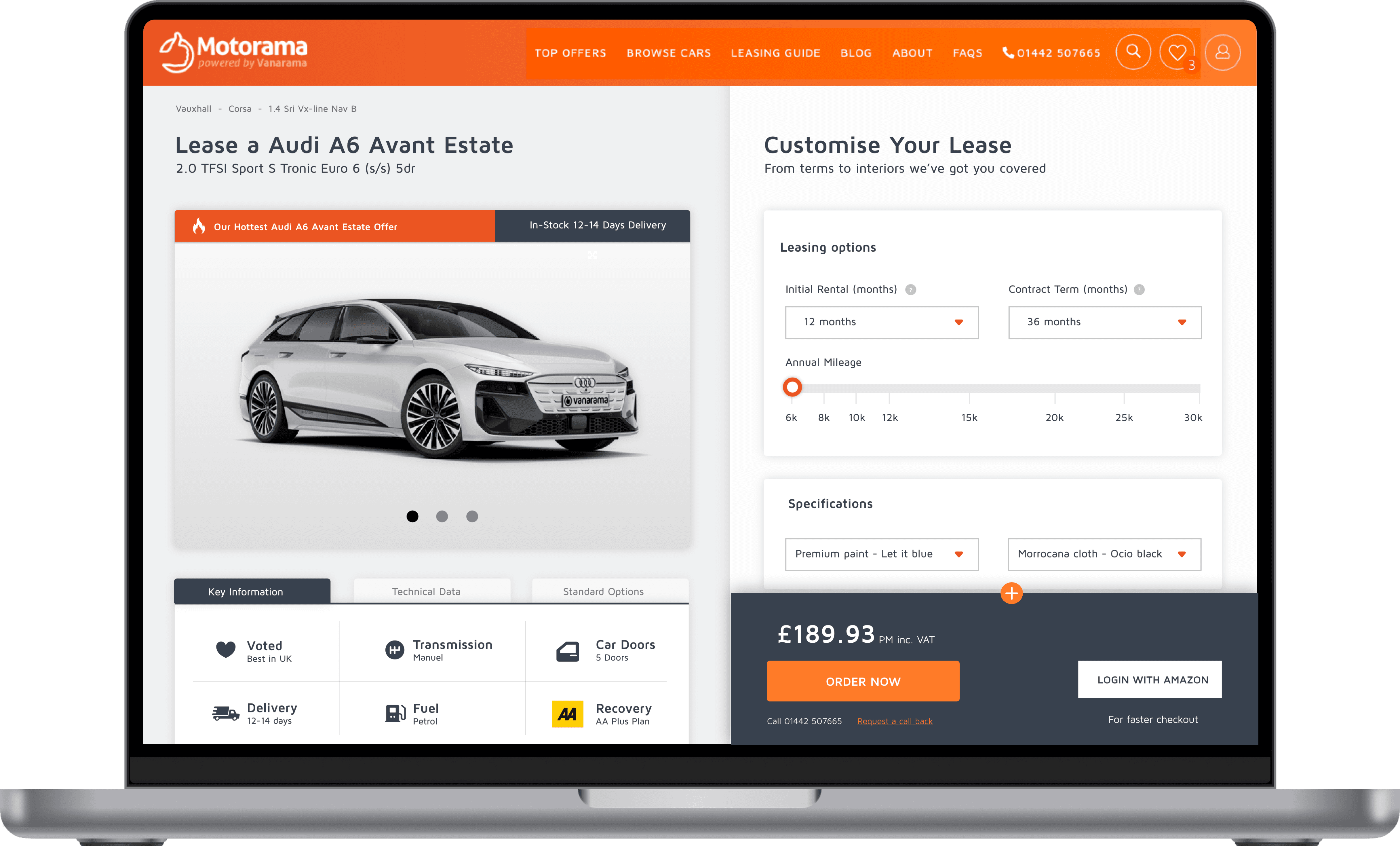
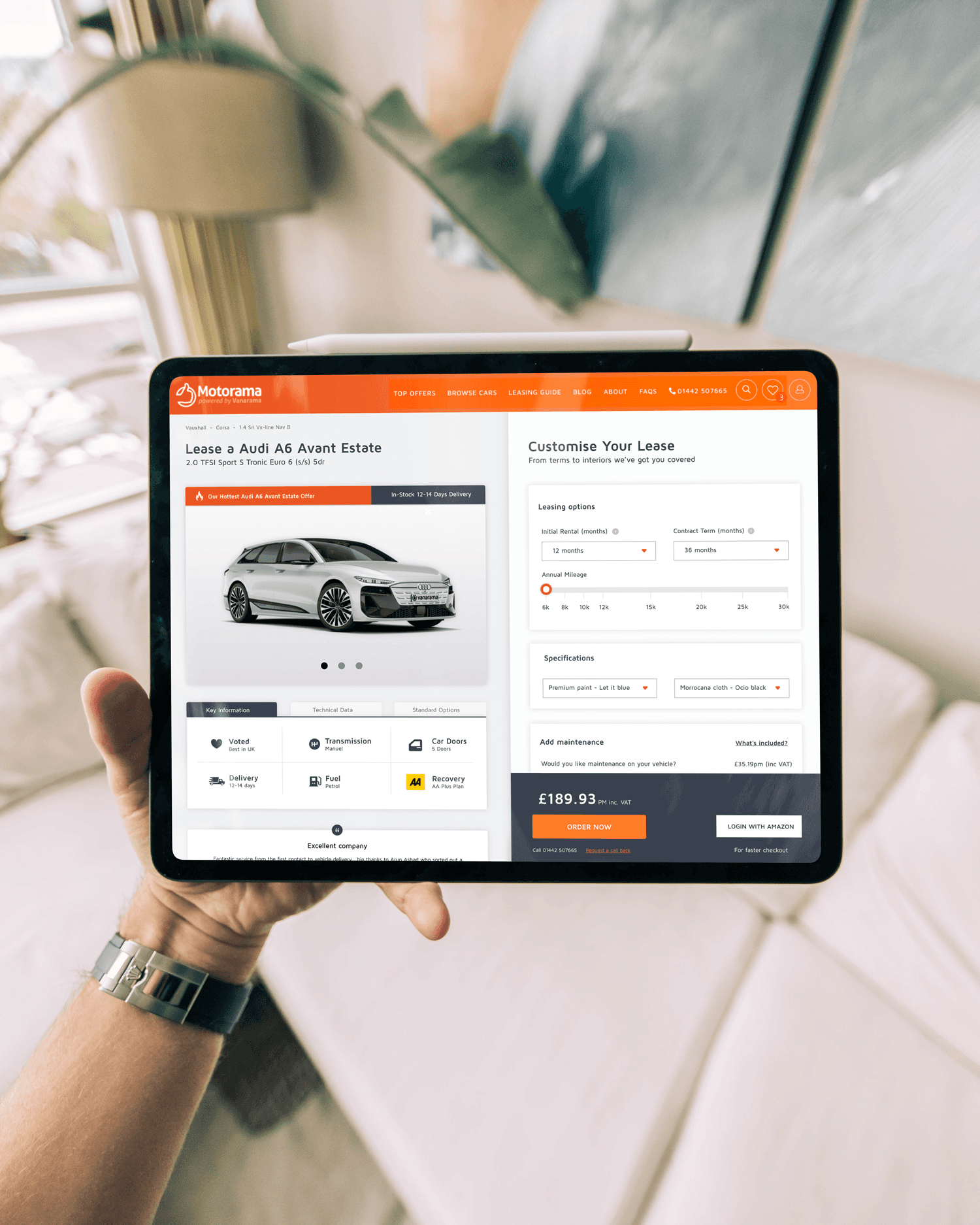
Two-column layout separating content from configuration, explore on the left, build your deal on the right.

Two-column layout separating content from configuration, explore on the left, build your deal on the right.

Swipeable gallery keeps imagery prominent but doesn't takeover

Six key specs readable in under three seconds

Trustpilot social proof at the right moment

Order summary panel makes the deal feel distinct & deliberate

Full-width orange CTA matched to the commitment being asked
The Impact

The A/B Test Validation

The A/B Test Validation

The redesign was released as an A/B test against the original page and after three weeks of testing outperformed projections across every metric. Support call volume dropped, hero CTA engagement increased significantly and users were successfully navigating to product pages, something the original page had almost entirely failed to achieve.

The redesign was released as an A/B test against the original page and after three weeks of testing outperformed projections across every metric. Support call volume dropped, hero CTA engagement increased significantly and users were successfully navigating to product pages, something the original page had almost entirely failed to achieve.

Variant B outperformed Variant A across every tracked metric from week one

Variant B outperformed Variant A on every metric

0%
Increase in conversion to product pages

+31%

Increase in conversion to product pages

0%
Reduction in search bounce rate

+38%

Reduction in search bounce rate

0%
Increase in derivative page engagement

+41%

Increase in derivative page engagement

0%
Uplift in Hot Deal vehicle sales

-22%

Uplift in Hot Deal vehicle sales

0%
Reduction in delivery-related support calls

-22%

Reduction in delivery-related support calls

Reusable components

CMS slots and filtering patterns added to the design system
Reflections

The success of this project wasn't just in the UI

The success of this project wasn't just in the UI

The success of this project wasn't just in the UI

The original ask was three page redesigns. The real problem was one broken journey. That reframe changed everything — what we built, how we prioritised, and why it worked.

The original ask was three page redesigns. The real problem was one broken journey. That reframe changed everything — what we built, how we prioritised, and why it worked.

Operational data is user research with a cost attached — every support call is a design failure with a price tag

Empty UI is never neutral — absence signals incompleteness in high-consideration purchases

When earlier stages do their job, later stages need less

Menu